Classic Red Rose Bouquet Embroidery
A Timeless Design That Builds Brand Warmth and Craft Credibility
As an embroidery designer who’s developed over 300 commercial designs for small businesses—from artisan bakeries to indie florists—I approached the Classic Red Rose Bouquet Embroidery with a dual lens: aesthetic appeal and functional viability. The title alone signals elegance, tradition, and emotional resonance—qualities that align powerfully with brands rooted in care, celebration, or handmade authenticity. This isn’t just decorative embroidery; it’s a visual shorthand for sincerity, attention to detail, and quiet confidence. For a local café embroidering aprons, a boutique adding chest patches to linen tote bags, or a wedding flower studio branding staff caps, the Classic Red Rose Bouquet Embroidery delivers immediate warmth without sacrificing polish.
Real-World Performance Across Small Business Merchandise
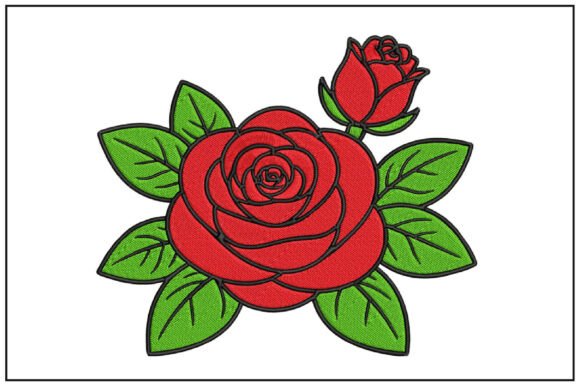
The Classic Red Rose Bouquet Embroidery excels where small businesses need versatility: as an embroidered patch on denim jackets or canvas totes, a subtle sleeve accent on staff uniforms, or a refined cap front logo for florists and creative studios. Its balanced composition—blooming roses with layered leaves—holds up beautifully at 2.5”–3.5” widths, making it ideal for apron embroidery, work shirt pockets, and boutique merchandise tags. On textured fabrics like canvas, twill, or linen, the design’s natural flow complements organic materials rather than fighting them. When used on product packaging accents (e.g., stitched labels on gift boxes or ceramic mugs), it elevates perceived value—customers associate rose motifs with craftsmanship and intentionality.
For Etsy sellers and handmade brands, this machine embroidery design supports cohesive storytelling: pair it with minimalist typography on a printable mockup, and you’ve got instant brand recognition across digital listings and physical goods. It also integrates smoothly into commercial embroidery workflows—no excessive jump stitches, no fragile isolated elements—and scales well for batch production of custom apparel.
Where to Apply Thoughtful Restraint
While elegant, the Classic Red Rose Bouquet Embroidery demands thoughtful placement. Avoid using it below 2” in width—fine petal details and leaf veins risk filling in or losing definition, especially on dark uniforms or high-thread-count fabrics. Cap fronts with deep curvature require careful digitizing adjustments; test the digital embroidery file on a curved foam stabilizer before full production. Similarly, dense stitch areas may struggle on loosely woven or stretchy textiles without proper cutaway stabilizer—always confirm fabric texture compatibility before stitching.
This design leans classic—not modern-minimal—so it’s less suited for tech startups or streetwear brands seeking bold abstraction. And while its floral theme fits naturally within Wedding Flowers branding, don’t force it onto unrelated categories (e.g., pet grooming or fitness apparel) without thoughtful context—brand identity hinges on authentic alignment, not just visual appeal.
How It Strengthens Your Business Identity
Consistent use of the Classic Red Rose Bouquet Embroidery builds recognition faster than generic icons. Customers subconsciously link its soft curves and organic rhythm to qualities like reliability, care, and human-scale craftsmanship—critical for small business trust. On staff aprons or tote bags, it signals pride in presentation. On customer gifts or event merch, it adds tactile distinction that printed logos can’t replicate. That handmade product feel? It comes through in the dimensionality of real thread, and this embroidery file preserves that integrity when executed correctly.
Visually, it supports color storytelling: rich reds and greens pop against cream linens or charcoal twills, while muted thread palettes keep it versatile across seasonal collections. Used alongside other design assets—like a simple monogram or clean sans-serif logotype—the bouquet becomes a signature flourish, not a standalone statement. That balance is key for long-term brand consistency.
Practical Designer Notes Before You Stitch
- Always test in black and white first—verify contrast and clarity before committing to thread colors.
- Check small-patch viability: resize the embroidery file to your target patch dimensions (e.g., 1.75”) and inspect petal edges and leaf stems for stitch merging.
- Review thread color contrast, especially on dark or textured uniforms—what reads beautifully on white cotton may vanish on navy fleece.
- Inspect spacing between elements: tight gaps between rose petals and leaves can cause nesting or skipped stitches on low-tension machines.
- Confirm hoop size compatibility—if your standard hoops are 4x4”, verify the design fits without re-hooping mid-stitch.
- Test on real fabric, not just tear-away stabilizer—fabrics like canvas or terry cloth behave differently under tension.
- Use appropriate stabilizer: medium-weight cutaway for knits, tear-away for stable wovens, and adhesive + cutaway for curved surfaces like caps.
- Create a physical mockup for client approval—digital previews rarely convey texture, sheen, or drape accurately.
- Compare it beside existing design assets: does it harmonize with your logo, packaging, and social visuals—or create visual dissonance?
- Confirm commercial licensing before any production run—this digital embroidery file must be cleared for resale, promotional use, and branded merchandise.
Final Thought: A Design That Serves Your Business, Not Just Your Aesthetic
The Classic Red Rose Bouquet Embroidery stands out because it bridges beauty and utility. It doesn’t shout—it invites. It doesn’t decorate—it communicates. For small business owners choosing embroidery for staff uniforms, boutique merchandise, or customer-facing products, this design earns its place not by trendiness, but by enduring resonance. Whether stitched on a barista’s apron, a florist’s cap, or a handmade soap box label, it quietly affirms quality, care, and continuity. In a market flooded with disposable graphics, that kind of quiet confidence is your most valuable brand asset.