Cross Stitch Goose Embroidery Pattern Di
First Impressions: Playful, Bold, and Unapologetically Craft-Centric
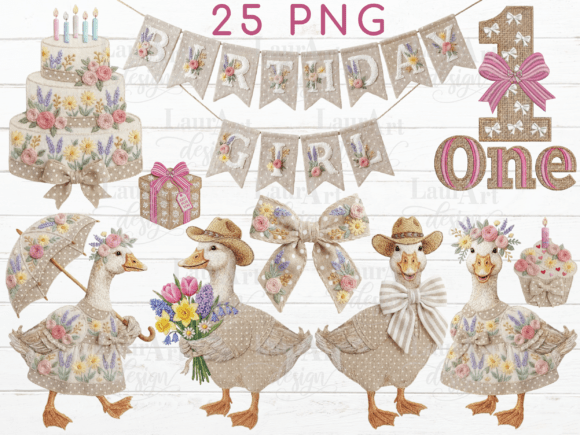
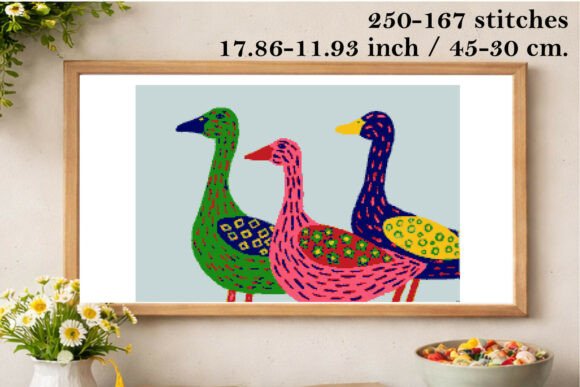
Opening the Cross Stitch Goose Embroidery Pattern Di file feels like unrolling a sketchbook page from a designer who loves folk art, vintage textile motifs, and a healthy dose of whimsy. The geese are stylized—not realistic, not cartoonish—but confidently graphic, arranged in a polka-dot rhythm that leans into psychedelic color potential without sacrificing stitch clarity. As a hand embroidery pattern, it’s immediately readable: clean outlines, intentional negative space, and a balanced distribution of detail across the composition. It doesn’t scream “vintage sampler” or “modern minimalism”—it occupies a sweet spot in between: handmade but intentional, nostalgic but fresh.
A Real-World Test: Stitching It onto a Linen Tea Towel for a Boutique Kitchen Line
I used the Cross Stitch Goose Embroidery Pattern Di to embroider a set of linen tea towels for a small-batch kitchen goods line. Why this design? Because geese carry quiet warmth—think farmhouse charm, not cartoon gag—and the polka-dot layout gives rhythm without overcrowding. On natural linen, the geese read beautifully at 3.5" wide (hooped comfortably in a 4" hoop), with Aida-like grid spacing translating cleanly to evenweave fabric. The design’s strength lies in its adaptability: you can lean into muted earth tones for a rustic boutique feel, or go high-contrast neon threads for a Gen Z-friendly apron or tote bag design. Customers responded most to the “handmade authenticity” it conveyed—not just the stitching, but the confident, slightly off-kilter charm of the geese themselves.
Where It Shines (and Where It Needs Thought)
- Custom apparel: Works well on sweatshirt cuffs, pocket flaps, or the back yoke of a denim jacket—its graphic shape holds up at medium scale without losing legibility.
- Tote bags & pillow covers: The repeating polka-dot energy makes it ideal for border treatments or clustered focal points. No need to over-stitch; the design’s personality carries weight even at modest sizes.
- Baby items & nursery decor: Gentle enough for onesies or crib mobiles when stitched in soft pastels—but avoid overly dense fill areas if stitching on delicate cotton interlock.
- Holiday & wedding gifts: Surprisingly versatile—swap thread colors to match seasonal palettes (ochre + sage for fall, slate + blush for weddings) without altering the design’s core identity.
- Etsy listings & craft fair products: Stands out in digital previews because it reads clearly in thumbnail size—no tiny details get lost in JPEG compression.
Use With Care: Practical Limits You’ll Notice Mid-Stitch
The Cross Stitch Goose Embroidery Pattern Di isn’t built for ultra-fine work. Avoid using it on caps or curved surfaces unless you resize carefully—the goose profiles rely on clean horizontal/vertical alignment, and distortion flattens their character. On dark fabric, test contrast early: some polka-dot spacing disappears if thread values aren’t distinct enough. Thin or stretchy fabrics (like lightweight jersey or rayon challis) need extra stabilizer—this isn’t a low-density fill-stitch pattern, so tension matters. And while it’s labeled as a hand embroidery pattern, don’t assume it converts seamlessly to machine embroidery without editing: no satin stitch paths or underlay are implied in the JPG file, and stitch density isn’t specified. If you’re planning commercial embroidery, treat it as a starting point—not a ready-to-hoop file.
What It Adds (and What It Doesn’t Pretend To Be)
This design elevates a handmade product by reinforcing intentionality—not just “I stitched something,” but “I chose this because it fits.” It builds customer trust through visual coherence: buyers recognize craftsmanship in the balance of positive/negative space, the consistency of stitch scale, and the way the geese interact with fabric texture. It supports brand consistency for small shops because it’s distinctive without being prescriptive—you can pair it with serif typography on packaging or let it stand alone on a patch. But it won’t magically increase perceived value on poorly finished items. A rushed stitch job or mismatched thread will undermine its appeal faster than any design flaw. Its giftability comes from warmth, not complexity—perfect for personalized gifts where charm outweighs technical showiness.
Designer Notes Before You Stitch (or Sell)
- Test the Cross Stitch Goose Embroidery Pattern Di on scrap fabric first—especially if using textured weaves or dark backgrounds.
- Check thread color contrast in both natural and artificial light; what reads well on screen may mute on fabric.
- Review stitch density visually: look for clusters of tight stitches in corners or goose beaks—these may require gentle padding or adjusted tension.
- Confirm your intended hoop size matches the design’s natural scale; resizing beyond ±20% risks distorting the polka-dot rhythm.
- Inspect small details (like eye dots or wing lines) in black-and-white mockups—they’re often the first elements to vanish on low-contrast fabric.
- Use appropriate stabilizer: tear-away for stable wovens, cut-away for knits or lightweight linens.
- If selling finished items commercially, verify licensing terms—this is a digital embroidery file, not a royalty-free asset by default.
- For digital product sellers: pair it with clean printable mockups showing multiple fabric and thread options—it performs best when buyers can *see* its flexibility.
Final Thought: A Pattern That Feels Like a Conversation Starter
The Cross Stitch Goose Embroidery Pattern Di doesn’t try to be everything. It’s not minimalist. It’s not hyper-realistic. It’s not optimized for mass production. What it *is*, consistently, is memorable, stitchable, and full of quiet confidence. Whether you’re an Etsy seller building a cohesive collection, a craft business owner refreshing holiday merchandise, or a hobbyist stitching a meaningful gift, this pattern rewards attention—not just to technique, but to context. It reminds you that great embroidery design isn’t about perfection. It’s about presence. And these geese? They’ve got presence in spades.