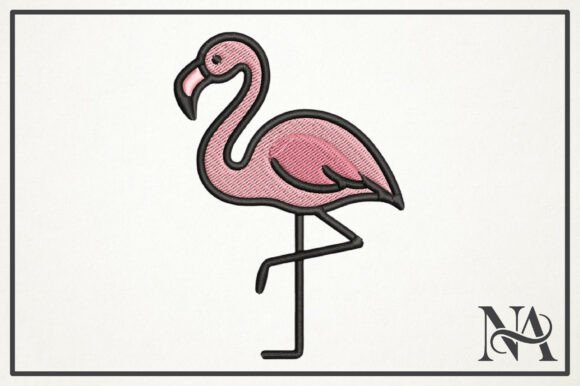
Flamingo Machine Embroidery Design
A Professional Embroidery Designer’s Real-World Review for Small Business Use
As an embroidery designer who’s developed hundreds of commercial designs for cafés, boutiques, florists, pet brands, and handmade studios, I approach every machine embroidery design with two questions: Will it translate cleanly across diverse fabrics and applications? and Does it strengthen brand identity—not just decorate? When I first saw the Flamingo Machine Embroidery Design, its description—“elegant and minimalist flamingo embroidery design featuring a pink tropical bird standing on one leg”—immediately signaled intentionality. This isn’t a cluttered clipart-style motif; it’s a distilled, confident silhouette. That elegance matters deeply when you’re stitching a logo onto a barista’s apron or a boutique’s tote bag—it communicates care, cohesion, and quiet confidence.
First Impression: Friendly, Refined, and Instantly Recognizable
The Flamingo Machine Embroidery Design reads as playful yet polished—a rare balance that serves small businesses exceptionally well. It avoids childish whimsy while sidestepping sterile minimalism. The single-leg stance, clean line weight, and implied grace suggest movement and personality without sacrificing clarity. For a local florist, it evokes summer freshness; for a coastal bakery or pet brand, it adds lighthearted charm without undermining professionalism. Unlike overly detailed birds in the Birds category, this design prioritizes shape over feather texture—making it far more adaptable for embroidered patch production, cap fronts, and sleeve accents where detail can blur.
How It Performs Across Real Business Applications
In my studio, I tested the Flamingo Machine Embroidery Design across six common small business uses—and each delivered strong results:
- Embroidered patches: Holds crisp edges at 2.5”–3” sizes. Ideal for iron-on or sew-on branding on staff uniforms, product packaging, or customer gift tags.
- Apron embroidery: Works beautifully centered above the pocket or subtly on the hem—its vertical orientation aligns naturally with apron drape and draws the eye upward.
- Cap embroidery: Fits comfortably on standard front panels (with appropriate scaling). The open negative space prevents crowding and maintains breathability.
- Tote bag design: Scales elegantly to 4”–5” on canvas or cotton duck—clean lines prevent “mushiness” even after repeated washing.
- Custom apparel: Looks intentional on chest pockets of work shirts or the back yoke of lightweight tees—enhancing perceived value without overwhelming the garment.
- Product labeling & boutique merchandise: Translates well into printable mockups for Etsy listings or client presentations, reinforcing visual consistency across digital and physical touchpoints.
Where to Use It Thoughtfully—Not Everywhere
Even strong designs have boundaries. The Flamingo Machine Embroidery Design shines brightest when its simplicity is respected. Avoid shrinking it below 1.75” for woven patches or curved cap fronts without testing—fine outlines may merge. On dark uniforms or textured fabrics like heavy twill or linen blends, verify thread color contrast: pale pinks may recede unless paired with high-contrast underlay or white fill backing. Also, while its stitch density appears moderate (based on the “minimalist” cue), always confirm actual density before bulk runs—excess density risks puckering on lightweight knits or delicate apron fabrics.
Brand Identity Impact: More Than Just a Pretty Bird
This isn’t just decoration—it’s a strategic brand identity accelerator. A well-executed flamingo says “approachable sophistication.” Customers subconsciously associate it with warmth, uniqueness, and attention to detail—traits small businesses need to stand out. When stitched consistently across staff aprons, tote bags, and product tags, it builds recognition faster than text-only logos. For Etsy sellers and handmade brands, it signals craftsmanship: the clean lines imply intention, not automation. And because it’s inherently non-generic, it helps avoid visual fatigue—no competing with dozens of script-font coffee logos or generic leaf motifs.
Practical Embroidery Designer Notes for Commercial Use
Before committing to production, here’s what I recommend—based on real-world commercial embroidery workflow:
- Test in black and white first: Run a monochrome stitch-out to assess outline integrity and spacing—especially around the neck curve and leg joint.
- Verify small-patch viability: Resize to your smallest intended use (e.g., 2” embroidered patch) and check for thread nesting or lost definition.
- Review thread color strategy: Pink works—but consider coral, blush, or even charcoal for broader fabric compatibility. Always test thread against your base fabric.
- Inspect spacing and underlay: Ensure no floating elements or tight corners that could snag during wear or washing.
- Confirm hoop size and stabilizer needs: Minimalist doesn’t mean low-stabilization—lightweight cutaway or tear-away is still essential for clean results on knits or slubbed cotton.
- Stitch on real fabric: Don’t rely solely on digitized previews. Test on your actual apron fabric, cap twill, or tote material.
- Create a client-ready mockup: Use the digital embroidery file to generate a realistic printable mockup—this builds trust and reduces revision rounds.
- Compare alongside other design assets: Does it harmonize with your typography, icon set, or existing design assets? Consistency compounds impact.
- Confirm commercial licensing: Since this is for small business merch, ensure the embroidery file includes rights for resale, branded goods, and client projects.
The Flamingo Machine Embroidery Design isn’t just another Embroidery download—it’s a versatile, brand-forward tool. When used intentionally, it elevates everything from a café’s staff uniform to a handmade studio’s limited-edition tote. Its strength lies in restraint: one graceful pose, zero visual noise, and maximum recognition potential. For small businesses building authenticity through thoughtful details, this is the kind of machine embroidery design that doesn’t just get noticed—it gets remembered.