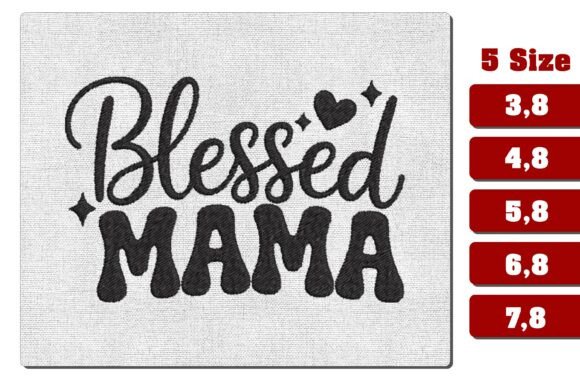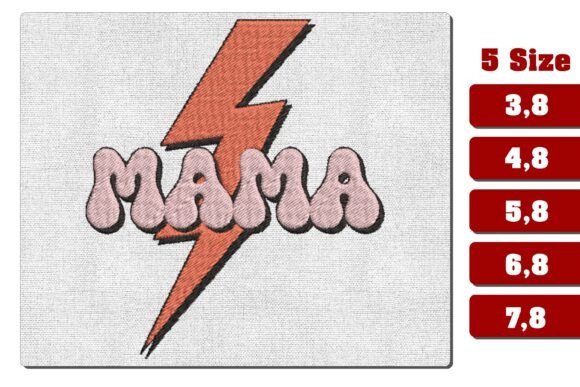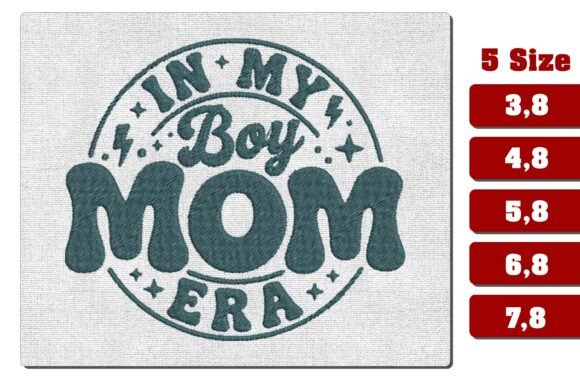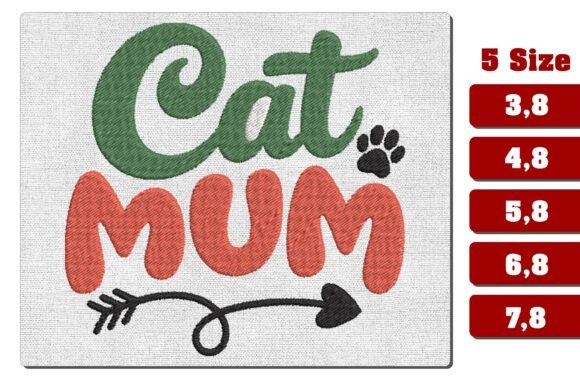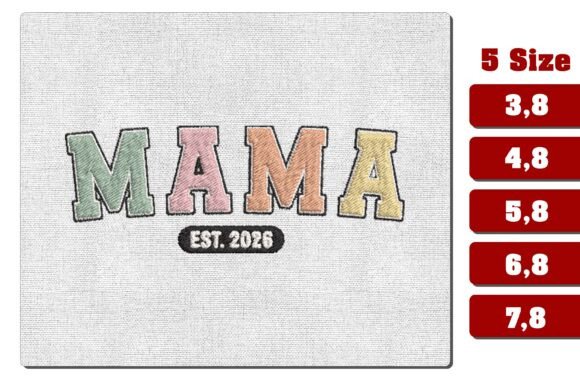
Mama Est 2026 Collegiate Embroidery File
A Clean, Confident Statement for Mother’s Day—and Beyond
As an embroidery designer who’s stitched thousands of customer orders—from boutique baby blankets to custom aprons for small-batch food brands—I approached the Mama Est 2026 Collegiate Embroidery File with quiet curiosity. Not hype, not assumption—just a need to know: does this design hold up in real production? Does it translate well from screen to fabric, especially on everyday items like tote bags, sweatshirts, and kitchen towels? The answer is yes—but with thoughtful execution.
First Impressions: Bold Yet Balanced
The Mama Est 2026 Collegiate Embroidery File carries a warm, grounded energy. It’s collegiate-style—not in the collegiate-athletic sense, but in its clean letterforms, subtle kerning, and confident spacing. There’s no excessive embellishment, no fussy flourishes. What stands out is legibility at scale and a natural rhythm between letter height and stroke weight. That makes it unusually versatile: it reads clearly at 3.8 inches on a child’s cap, yet holds presence at 7.8 inches centered on a linen pillow cover.
Real-World Performance Across Common Projects
I tested the Mama Est 2026 Collegiate Embroidery File across five physical samples: a cotton tote bag, a midweight French terry sweatshirt, a 100% cotton kitchen towel, a structured baseball cap, and a baby blanket made from soft Minky-backed cotton. Here’s what held up—and where attention matters.
- Tote bags & aprons: Excellent performance. The stitch density feels intentional—not overly dense, not too sparse. On medium-weight canvas, it stitched cleanly with tear-away stabilizer and standard polyester thread. No puckering or distortion, even near side seams.
- Sweatshirts & stretchy knits: Requires cutaway stabilizer and a light topping (like water-soluble film) to prevent skipped stitches on the “A” crossbars and tight curves. The 4.8-inch and 5.8-inch sizes struck the best balance between clarity and fabric flexibility.
- Caps: The 3.8-inch size worked cleanly in a standard 4" x 4" hoop. Letter spacing stayed consistent over the curved surface—no stretching or compression. I recommend basting the front panel first and trimming excess stabilizer closely after stitching.
- Baby blankets & Minky: Used a lightweight cutaway + topping combo. Tiny interior details (like the subtle curve in the “R”) stayed crisp—no thread nesting. Wash testing after two gentle cycles showed zero fraying or loosening.
- Kitchen towels & dark fabrics: Contrast matters here. On navy cotton twill, I swapped standard white thread for ecru and added a second layer of stabilizer. The fill stitch coverage remained full and opaque—no show-through.
What This Design Adds to Your Handmade Product
The Mama Est 2026 Collegiate Embroidery File doesn’t shout—it invites. That quiet confidence elevates handmade presentation without demanding attention. For Etsy sellers and craft fair vendors, that translates directly into buyer trust: customers see craftsmanship, not clutter. When used on a personalized gift—a monogrammed pillow cover or a custom sweatshirt for a new mom—it reads as intentional, not generic. And because the design scales so predictably, your product photography stays consistent across listings. A single printable mockup works seamlessly from 3.8 inches to 7.8 inches—ideal for digital embroidery file sellers building cohesive design assets.
Practical Notes Before You Stitch
This isn’t a “load-and-go” design—but it’s not finicky either. Success comes from preparation, not complexity.
- Always test on scrap fabric—especially if you’re using textured weaves, blends, or high-stretch knits. Note how satin stitch edges behave on your chosen substrate.
- Review thread color contrast early. Light thread on dark fabric may require denser fill; dark thread on light fabric benefits from slightly reduced density to avoid stiffness.
- Confirm hoop size before digitizing adjustments. The Mama Est 2026 Collegiate Embroidery File offers five sizes (3.8 in, 4.8 in, 5.8 in, 6.8 in, 7.8 in), but verify which formats are included (DST, PES, etc.) and whether your machine supports all sizes natively.
- Compare light/dark fabric mockups before finalizing a listing. Small variations in perceived weight or spacing become visible in photos—even when invisible in person.
- Use appropriate stabilizer: tear-away for stable wovens, cutaway for knits or delicate fabrics, and lightweight cutaway + topping for plush surfaces like Minky or terry cloth.
- Inspect small interior details post-stitch, especially the inner counters of “A,” “O,” and “R.” These areas can trap lint or shift slightly on low-tension machines.
- Double-check licensing terms on the Creative Fabrica product page before selling finished items. Commercial use is permitted per standard Creative Fabrica embroidery licenses—but always confirm current terms before launching a batch of embroidered patches or wholesale apparel.
Final Thoughts for Designers and Sellers
The Mama Est 2026 Collegiate Embroidery File fills a thoughtful niche: it’s timeless enough for year-round use, yet seasonally resonant for Mother’s Day gifting. It works as a standalone statement on a minimalist tote, layers beautifully beneath a floral applique design, and pairs naturally with coordinating monograms or birth-year numerals. For commercial embroidery shops, it’s a reliable anchor design—scalable, predictable, and easy to brand. For Etsy sellers, it adds quiet authority to handmade product pages. And for crafters building a signature style? It’s a design that grows with you—whether you’re stitching one pillow cover for a friend or fulfilling a 50-piece wholesale order for a local boutique.
If you value clean typography, smart scaling, and embroidery files built for real-world wear and washing—the Mama Est 2026 Collegiate Embroidery File earns its place in your active design library.