Square Basket Base for Embroidery Digita
As a designer who’s stitched hundreds of digital embroidery files across apparel, home goods, and boutique merchandise—this Square Basket Base for Embroidery Digita immediately stood out not for flash, but for quiet utility. I tested it last week on a linen-cotton tea towel destined for a local craft fair, then scaled it down for a baby onesie and up for a custom tote bag. Here’s what held up—and where you’ll want to pause before pressing “start.”
A Clean, Grounded Shape with Quiet Versatility
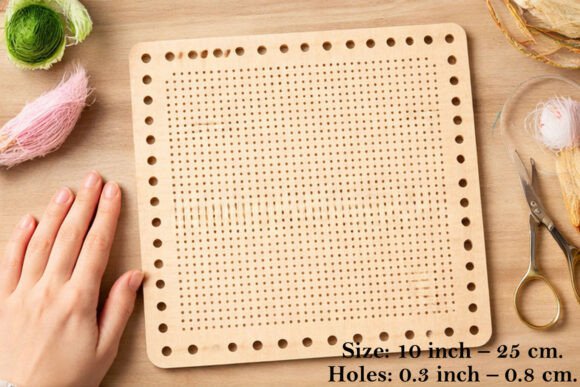
The first thing that struck me was its balance: a crisp 10-inch (25 cm) square outline with subtle interior lines suggesting woven texture—not literal basket weaves, but gentle directional cues that read as handcrafted, not mechanical. It doesn’t scream “basket”—it suggests one, gracefully. That restraint is rare. Most basket-themed embroidery files overcommit: too many zigzags, too much fill stitch density, or overly literal handles that fight the hoop. This one breathes. It feels like a base layer—not a finished motif—but one that invites customization: add a monogram in the center, tuck in a floral sprig, or let it stand alone as minimalist framing for a patch or pillow cover.
Where It Shines in Real Projects
- Embroidered tote bags: Hooped cleanly on medium-weight canvas, the clean outer border anchored the design without buckling. The open center left room for a small embroidered word (“Gather,” “Home,” “Bloom”) without overcrowding.
- Tea towels & kitchen linens: On tightly woven cotton, the moderate stitch density (no heavy satin fills or dense underlay) washed beautifully after two cycles—no puckering, no thread fuzzing.
- Baby items & nursery decor: Reduced to 6 inches, it worked perfectly centered on a muslin swaddle blanket. The generous negative space kept it soft and uncluttered—ideal for delicate fabrics and early-stage stitching confidence.
- Custom sweatshirts & aprons: Paired with a light tear-away stabilizer, it stitched smoothly on midweight fleece and twill. No skipped stitches, even across the slight curve of an apron pocket edge.
- Etsy patches & boutique branding: As a standalone applique base (cut from felt or denim), the sharp corners and consistent line weight gave a polished, intentional look—far more refined than generic square frames.
Where to Proceed With Intention
This isn’t a “set and forget” file. Its strength lies in thoughtful placement—not universal compatibility. Use caution on:
- Stretchy fabrics (knits, jersey): Without proper cutaway stabilizer and careful hooping, the outer square can distort slightly at corners. Test on scrap first—and consider adding a light basting stitch around the perimeter before main stitching.
- Dark or textured backgrounds: The design relies on clean line definition. On heather grey fleece or bouclé, small interior details softened. Stick to solid, smooth-to-mid-texture fabrics for best clarity.
- Caps & curved surfaces: While it scales well, the rigid square geometry resists natural drape. Avoid placing it near the crown seam or bill curve—center it on the front panel only, and confirm your hoop fits the cap frame.
- Small hoops (under 5x7 inches): At full size, it needs breathing room. If you’re using a 4x4 hoop, resize thoughtfully—don’t just crop; reposition key lines to preserve proportion and avoid truncating corners.
- Frequent-wash items (baby bodysuits, dish towels): Confirm your thread colors are high-quality polyester—cotton floss may fade faster in the center negative space where contrast matters most.
Design Integrity Meets Customer Perception
What surprised me most wasn’t how it stitched—but how people responded to the finished product. At the craft fair, customers didn’t say “nice basket.” They said, “That feels handmade, not mass-produced,” and “It looks like it belongs there—not pasted on.” That’s the mark of a strong machine embroidery design: it supports the object it lives on, rather than competing with it. As a digital embroidery file, it elevates perceived value without demanding premium pricing. For an Etsy seller or small shop product, that quiet professionalism builds trust fast—especially when paired with cohesive printable mockups showing it on natural fabrics and neutral tones.
Practical Designer Notes Before You Stitch
- Always test on fabric scrap with your exact stabilizer and thread—especially if using it for commercial embroidery or client work.
- Check contrast: view the design in black-and-white mockup mode. Does the shape hold? Does the interior detail read at your intended size?
- Review stitch density visually—not just numerically. This file avoids excessive fill, but zoom in on corners to ensure no tiny overlapping stitches will cause thread breaks.
- Confirm licensing: since this listing is for DIGITAL FILES ONLY, verify whether resale of finished items (e.g., embroidered totes) or redistribution of the file itself is permitted by the creator.
- For personalized gifts or custom apparel, pair it with simple, legible fonts—avoid ornate scripts that clash with its grounded geometry.
- If using for applique design, cut your base fabric with ⅛" extra—those clean corners need precise alignment.
Bottom line? The Square Basket Base for Embroidery Digita isn’t flashy—but it’s reliable, adaptable, and quietly confident. It belongs in your core design assets folder alongside your favorite borders and frames—not as a novelty, but as a foundational element. Whether you’re building a craft business, prepping holiday inventory, or stitching a one-of-a-kind gift, this file earns its place by doing one thing exceptionally well: holding space—gracefully—for what comes next.