Cowboy Ghosts Embroidery Design
First Impressions: Spooky, Playful, and Uniquely Western
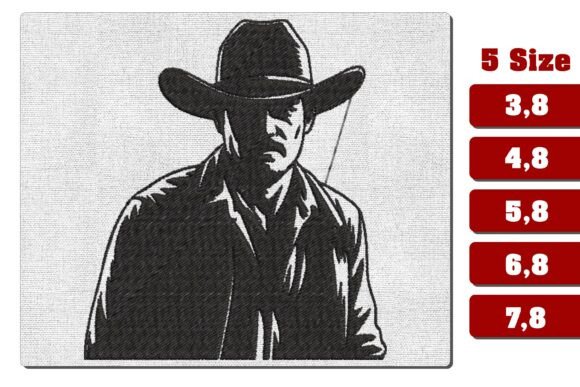
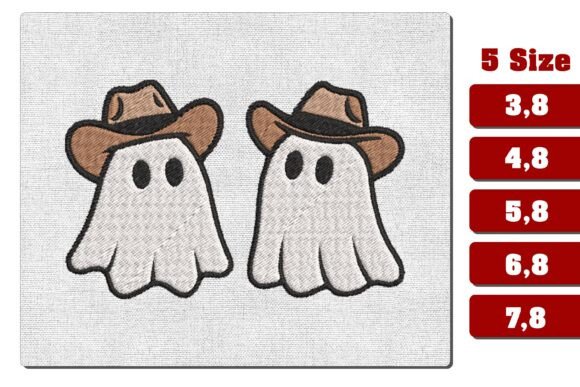
When I opened the Cowboy Ghosts Embroidery Design file, I smiled—not because it’s “cute,” but because it lands with personality. It’s a clever twist on Western iconography: stylized cowboy silhouettes rendered as translucent, slightly mischievous ghosts, complete with hats, boots, and subtle spectral swirls. There’s no clutter, no over-rendered detail—just confident line work and smart negative space. The composition feels balanced at every size, which matters when you’re scaling for real projects. As a designer who regularly sources embroidery files for boutique clients and craft business partners across South America and beyond, I appreciate how this design avoids trend-chasing while still feeling fresh.
A Real-World Test: Embroidering a Linen Tote for a Boutique Launch
Last week, I stitched the 5.8-inch version of Cowboy Ghosts Embroidery Design onto a natural linen tote for a small shop in Medellín. Why that size? Because it filled the front panel without overwhelming the fabric’s texture—and because the ghost outlines held crispness even on linen’s slight irregularity. I used medium-weight cutaway stabilizer and tested thread colors first: charcoal gray thread on oat-colored linen gave depth without harsh contrast, while white thread on navy denim (for a second sample) popped cleanly. The stitch density felt intentional—not too dense to cause puckering, not too sparse to lose definition. No floating stitches, no nesting issues. That tells me the digitizing is clean, professional-grade.
Where This Design Shines (and Where It Needs Thought)
Cowboy Ghosts Embroidery Design works beautifully on:
- Custom apparel—especially relaxed-fit sweatshirts and heavyweight tees where its whimsy reads clearly at arm’s length
- Embroidered patches—the clean outer edges and moderate fill stitch coverage make it ideal for iron-on or sew-on versions
- Tote bag design and kitchen towel applications, where the theme adds charm without sacrificing legibility
- Holiday embroidery for October markets or Western-themed baby showers—its gentle spookiness avoids being too intense for nursery decor or baby embroidery
- Small shop product differentiation: it gives handmade product listings on Etsy or local craft fairs an instant point of view
But be thoughtful with placement and substrate:
- Avoid using the smallest sizes (3.8–4.8 inches) on highly textured fabrics like bouclé or thick terry cloth—the ghost details can blur
- On stretchy fabric or curved surfaces like caps, opt for the 4.8-inch version max and reinforce with tear-away + topping
- For dark fabric, double-check satin stitch coverage in the ghost “bodies”—some digitizers skimp on underlay, and thin fill areas may show fabric shadow
- The design includes no lettering, so don’t expect custom names or dates unless you add them separately—this is a standalone motif, not a monogram-ready layout
Design Assets That Build Trust—Not Just Decoration
What makes Cowboy Ghosts Embroidery Design more than just a fun graphic? It signals intention. Customers browsing a handmade product or personalized gift respond to coherence—not just “a cowboy” or “a ghost,” but a story told through shape and restraint. When I showed the finished tote to the boutique owner, she immediately pictured matching aprons and tea towels. That’s the power of a well-balanced machine embroidery design: it extends naturally into a collection. For Etsy sellers and creative entrepreneurs, that means fewer one-off listings and more cohesive digital embroidery file bundles. For apparel decorators, it means less client back-and-forth about “what should go here?”—the design already answers that.
Practical Notes Every Embroidery Designer Should Check
Before stitching Cowboy Ghosts Embroidery Design into your next project:
- Test on scrap fabric first—especially if pairing with textured or dark substrates
- Review stitch density visually in your embroidery software; look for tight clusters near hat brims or boot tips that might need minor editing
- Confirm hoop size compatibility—the largest version (7 inches) will require a 8×12 hoop or larger
- Inspect small details in black-and-white mockups—ghost transparency effects rely on contrast, not color
- Use proper stabilizer: cutaway for knits, tear-away for stable wovens, and always test topping on napped fabrics
- Verify licensing before selling finished products or bundling as design assets—commercial use rights aren’t implied by availability alone
Final Thought: A Design That Fits Its Purpose—Without Overpromising
Cowboy Ghosts Embroidery Design doesn’t try to be everything. It’s not a photorealistic portrait, nor is it minimalist enough to vanish on busy fabric. It sits confidently in the middle: expressive, scalable, and rooted in craft logic. Whether you’re stitching a holiday embroidery gift for a rancher’s kid, building a small shop product line in South America, or sourcing reliable embroidery file options for a digital marketplace, this design earns its place—not because it’s flashy, but because it stitches cleanly, reads clearly, and leaves room for your brand voice to come through. That’s the mark of a truly useful machine embroidery design.