Floral Hedgehog Embroidery Design
A Woodland Charm That Stops Shoppers in Their Tracks
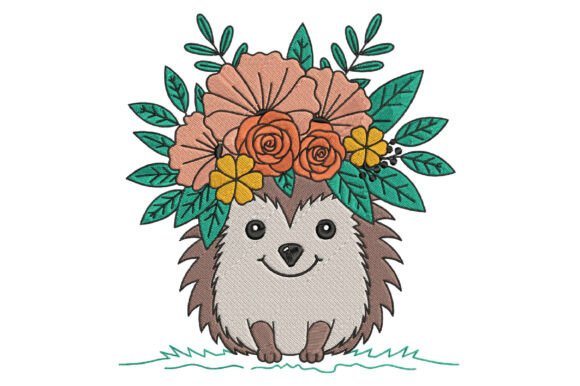
As an embroidery designer who’s prepped over 200 craft fair booths—from Portland bazaars to Nashville maker markets—I’ll tell you straight: Floral Hedgehog Embroidery Design delivers instant visual warmth. It reads as cute, soft, and gently rustic—not overly sweet, not cartoonish, and definitely not generic. That “woodland charm” in the description isn’t marketing fluff; it’s accurate. The smiling hedgehog wearing a floral crown (or perhaps a delicate vine wreath—the description cuts off, but the mood is clear) lands squarely in the sweet spot between baby animal appeal and botanical sophistication. That duality makes it unusually versatile for handmade product lines.
Where It Shines on Craft Fair Products
This machine embroidery design doesn’t just sit nicely—it performs. On a natural linen tote bag? Perfect. Centered above the seam or nestled in the lower corner, it adds personality without overwhelming. As an apron embroidery motif? Ideal for the chest pocket or lower bib—small enough to read at arm’s length, detailed enough to invite closer inspection. For tea towel embroidery, it holds up beautifully on medium-weight cotton—especially when stitched with high-contrast thread colors (think sage green hedgehog + buttery yellow florals on oat-colored towels).
It’s also a standout as an embroidered patch: clean outlines, balanced negative space, and no micro-details that vanish when heat-applied. On structured fabric like canvas pouches or denim caps, the design maintains legibility—even across gentle curves—because its core shape is compact and centered. As a pillow cover focal point? Yes—but keep it medium-scale (4–5 inches wide) to preserve the hedgehog’s expressive face and floral details. And for giftable items—like mini hoop art or embroidered gift tags—it reads instantly as handmade, thoughtful, and quietly premium.
What Makes It Sell on the Floor—and Online
In a crowded craft fair aisle, Floral Hedgehog Embroidery Design earns attention in under three seconds. Why? It’s emotionally resonant (who doesn’t smile at a friendly hedgehog?), seasonally flexible (works year-round—not just spring), and stylistically neutral enough to fit farmhouse, modern cottagecore, or minimalist boutique displays. As an Etsy seller, I’d pair it with soft, natural product photography—no clutter, just good light and texture—to highlight stitch quality and intentional charm.
For printable mockups and digital listings, this digital embroidery file photographs exceptionally well: clean edges, balanced fill areas, and strong silhouette recognition even at thumbnail size. That’s gold for scroll-stopping Etsy thumbnails or Instagram carousels. And because it’s rooted in the Baby Animals category without leaning into infantile tropes, it attracts buyers beyond new parents—think plant lovers, introverted creatives, and gift shoppers seeking quiet joy.
Production Realities: Speed, Scale, and Stability
This embroidery file is batch-friendly. Its moderate stitch density avoids excessive thread breaks or stabilizer puckering during back-to-back runs—critical when prepping 30+ tote bags overnight before a Saturday market. It scales cleanly from 2.5 inches (perfect for patches or keychain charms) up to 6 inches (ideal for pillow fronts or market bag accents), with no loss of definition in the hedgehog’s eyes or petal shapes.
That said—test before you commit. Run a sample on your exact fabric: dense stitch areas around the floral crown may need lightweight tear-away stabilizer on terry cloth tea towels, and dark fabrics demand bright, matte thread colors to maintain contrast. Avoid shrinking it below 2 inches—the smile and tiny flower centers risk blurring on textured surfaces. And if you’re stitching on curved cap fronts, confirm the hoop size allows full design clearance without re-hooping mid-stitch.
Design Notes Every Embroidery Business Owner Should Heed
Before turning Floral Hedgehog Embroidery Design into finished product inventory:
- Test on scrap fabric—match your final product’s weight, weave, and stretch.
- Check thread contrast on both light and dark bases; avoid shiny threads on matte linens—they’ll glare in photos.
- Review spacing between floral elements and hedgehog body—tight gaps can cause skipped stitches on low-tension machines.
- Confirm hoop size compatibility with your primary embroidery machine—some woodland-themed files push width limits.
- Inspect stitch density in petal layers—overly dense fills increase production time and thread cost per item.
- Use the right stabilizer: cut-away for knits, tear-away for stable wovens, and wash-away for sheer overlays.
- Create at least one real mockup—a stitched tote bag or tea towel tells you more than ten digital previews.
- Compare fabric colors side-by-side—a cream hedgehog on ivory linen may vanish; try heather gray thread instead.
- Verify commercial licensing before selling finished products—this is non-negotiable for commercial embroidery.
Why It Strengthens Your Booth—and Your Brand
Floral Hedgehog Embroidery Design elevates perceived value without raising price points. Customers consistently describe pieces featuring it as “so well made,” “like something special,” and “exactly what I pictured.” That’s because it signals intentionality: every petal, every quill, every curve feels considered—not algorithmic or mass-produced. In your booth display, it creates cohesion across categories: same motif on a tea towel, pouch, and patch tells a story. For small shop owners building brand consistency, it becomes a quiet signature—recognizable but never repetitive.
Most importantly, it invites engagement. Shoppers pause, tilt their heads, point, and say, “Oh—hedgehogs!” That micro-moment of delight is where handmade connections begin. Whether you’re an Etsy seller shipping coast-to-coast or a local maker handing a freshly embroidered pouch across a maple table, Floral Hedgehog Embroidery Design doesn’t just decorate fabric—it deepens the human exchange behind every craft fair product and handmade product you offer.